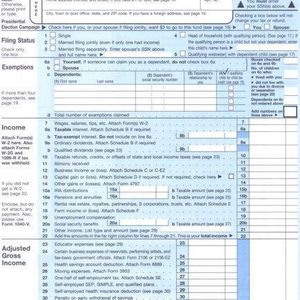
Hello. My name is the Internal Revenue Code. I am a compilation of code
sections that were passed into law by Congress and the President with updates
and changes since I was first born on October 3, 1913.
I get my authority from the US Constitution.
Article I, § 8, cl. 1
The Congress shall have power To lay and collect Taxes, Duties, Imposts and
Excises ... but all Duties, Imposts and Excises shall be uniform throughout the
United States
Article I, § 2, cl. 3
Representatives and direct Taxes shall be apportioned among the several States
which may be included within this Union, according to their respective Numbers
Article I, § 9, cl. 4
No Capitation, or other direct, Tax shall be laid, unless in proportion to the
Census or Enumeration herein before directed to be taken.
In the early 1900s, the American public pushed politicians hard for the passage of an income tax since the prior system of tariffs was viewed as oppressive and unfair to working class citizens.
If the only things Congress wanted to tax were wages and personal earnings, no change was needed to the Constitution, since such items were never subject to apportionment. But to pass an income tax that was more comprehensive, the 16th Amendment was proposed.
The 16th Amendment simply removed the apportionment requirement for certain types of income tax. In other words, it didn't give Congress a new power to tax, it simply took away
one of the restrictions.
16th Amendment The Congress shall have power
to lay and collect taxes on incomes, from whatever source derived,
without apportionment among the several States, and without regard to
any census or enumeration.
Now the here's the law that make Ed liable.
§ 1. Tax imposed -
There is hereby imposed on the taxable income of every individual ... a tax determined in accordance with
the following table.
§ 63. Taxable income defined - the term "taxable
income" means gross income minus the deductions allowed by this chapter.
§ 61. Gross income defined - gross income means
all income from whatever source derived, including (but not limited to)
the following items:
(1) Compensation for services, including fees, commissions, fringe benefits, and similar items;
(2) Gross income derived from business;
(3) Gains derived from dealings in property;
(4) Interest;
(5) Rents;
(6) Royalties;
(7) Dividends;
(8) Alimony and separate maintenance payments;
(9) Annuities;
(10) Income from life insurance and endowment contracts;
(11) Pensions;
(12) Income from discharge of indebtedness;
(13) Distributive share of partnership gross income;
(14) Income in respect of a decedent; and
(15) Income from an interest in an estate or trust.
It really is that simple.
Still have questions?
You can read more about the urban legends and myths surround the Code here:
Tax Protester Frequently
Asked Questions
And here's a history of the tax laws in the United States:
The Tax History Museum
And for those of you who bought into the nonsense that the 16th Amendment was
never ratified, it was:
Wikipedia
If you really think that typos and differing spellings prevent an amendment
from being ratified, then the Bill of Rights was never ratified either, so
forget about free speech, guns, and due process.